The Financial Architecture of the Future: Energy and Carbon Management
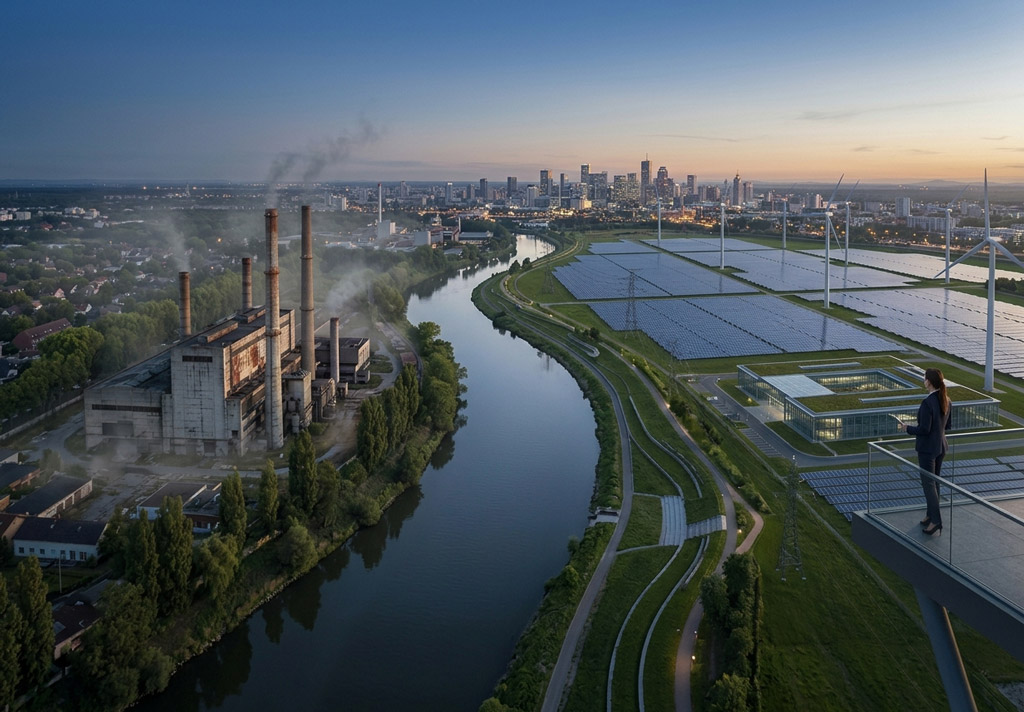
In traditional economic doctrines, a company's success was measured by metrics such as operational efficiency, sales volume, and market share. However, as we advance toward the third quarter of the 21st century, the fundamental pillars of the business world are shaking. Today, what determines a company's competitiveness is no longer just product quality or the price tag. How you access energy, how efficiently you use it, and how you manage your carbon footprint in the production process are fundamentally changing the rules of the game.
The transformation in the energy sector was long viewed as romantic environmentalism or a 'corporate social responsibility' project. Yet, the picture before us today is much clearer and starker: this transformation is no longer an environmental preference, but an economic imperative. Moreover, this process has long ceased to be an item on the agenda that can be postponed or 'looked into when the time comes.'
While global energy demand is rising rapidly, traditional systems reliant on fossil fuels are bottlenecking due to both geopolitical risks and tightening carbon regulations. Resources are becoming limited, and supply security is growing more fragile by the day. A new reality is emerging for the business world: energy is no longer just an expense item, but a strategic power.
Today, the way a company accesses energy and the sources it chooses determine not only its operational costs but also its direct market value. We are talking about a broad sphere of influence extending from investor confidence to supply chain resilience. It is now virtually impossible for a company that cannot foresee its energy costs or integrate renewable sources to promise 'sustainable profitability.'
At this point, the role of the CFO (Chief Financial Officer), historically seen as the company's 'treasurer,' is undergoing a revolutionary shift. It is no longer just a matter of ensuring budget discipline or cutting expenses. The test for the new generation of CFOs is to manage the company's future through the lenses of energy and carbon.
The transition to sustainable energy has become an inseparable part of financial resilience. Extreme volatility in energy prices and supply uncertainties are forcing companies to take a defensive stance. In this context, renewable energy investments and energy efficiency projects are not merely 'eco-friendly' steps; they are financial shields that protect the company against market fluctuations.
In short:
He who manages energy well, controls operational costs.
He who manages energy strategically, wins the global competition.
However, the real major disruption in the business world is happening with the 'Carbon Economy.' Carbon is no longer an invisible data point left in the footnotes of reports; it has settled right into the center of the balance sheet, directly affecting cash flow as a concrete reality.
For companies, carbon has turned into a critical variable that determines the cost of capital, shapes market access, and directly erodes profitability. Carbon management has migrated from the 'well-intentioned' reports of sustainability departments to the 'risk management' desks of finance departments. Because:
Carbon that is not measured accurately cannot be managed properly. And unmanaged carbon turns directly into a cost.
Establishing internal carbon pricing mechanisms, setting Science Based Targets (SBTi), and investing in low-carbon technologies are no longer optional preferences. These are the most critical components of a CFO's decision-making toolkit. A financial manager who cannot hedge carbon risk is, in fact, jeopardizing the company's future profit margins.
Another strategic inflection point is carbon markets. Carbon is no longer just a 'waste product'; it is a financial asset that can be bought and sold. Both mandatory and voluntary carbon markets offer brand-new financial instruments for companies. Carbon credits and certificates are becoming at least as strategic as foreign exchange or commodities.
Particularly, the European Union's Carbon Border Adjustment Mechanism (CBAM) is rewriting the rules of the game for export-oriented economies like Turkey. You can no longer calculate the cost of a product solely based on raw materials, labor, and logistics. Every gram of carbon emitted into the atmosphere during the production process is a tax to be paid at the border—meaning, a cost element.
This reality brings three new imperatives for the CFO:
Updating Pricing Strategies: Planning how to pass the carbon cost onto the product price or how to avoid this cost altogether.
Reshaping the Supply Chain: Realizing that your supplier's carbon footprint is ultimately your cost.
Evaluating Market Choices: Accelerating technological transformation to remain competitive in markets where the risk of carbon taxation is high.
Because it is now crystal clear that carbon risk is a financial risk.
Today, a CFO who shapes their agenda according to the future faces three fundamental questions:
What is the real cost of the green transition, and how can the return on investment (ROI) be optimized through energy savings?
How will carbon costs and energy investments affect short- and medium-term cash flow?
Most importantly, how will this transformation lower the company's cost of capital (WACC)?
When structured correctly, energy and carbon investments do not merely create an expense item. On the contrary, companies that comply with ESG (Environmental, Social, Governance) criteria can access lower funding costs, longer-term financing opportunities, and a much wider pool of investors in global markets today. In other words, this transformation is not a 'burden'; it is actually a tool for value creation.
The conclusion is absolute: energy and carbon management is no longer a technical engineering detail or a PR material. This domain is the highest level of strategic leadership in modern corporate governance.
Companies that read this transformation correctly, act proactively, and view carbon not as a 'risk' but as a 'management metric' on their balance sheets will not only optimize their costs; they will also be valued at much higher multiples by the market.
In the new world order, competition is sharpening along two sharp lines: companies that cannot manage energy lose cost efficiency, while those that cannot manage carbon lose markets.
The winners of the future will be those who build the financial architecture of this transformation today.
Share:
Related Articles
Suggestion Pool or Dust-Gathering Bo ...
In many companies, a "suggestion system" is set up, runs with enthusiasm fo ...

There Was Inventory, But No Cash: Th ...
While consulting for one of my clients, I once again encountered a misconce ...

Transformation Doesn't Begin in Code ...
The same fundamental mistake appears in the vast majority of failed digital ...

The Product Existed, the Future Didn ...
One of the least discussed yet most destructive risks to sustainability is ...

Surviving Is Not Enough: The Ability ...
The global business environment has become increasingly unpredictable. Geop ...

Financial Crises Do Not Begin Overni ...
Access to finance plays a vital role in enabling companies to achieve their ...

Lessons from the Past, Strength for ...
There is an unavoidable truth in life and in business: things do not always ...

Intuition and "Cognitive Finance" in ...
Today, the financial world is experiencing one of the greatest paradigm shi ...

Corporate Sound Strategy
Modern business life is living through a major paradox. On one hand, compan ...

Finance Exists Through People
For many years, finance has been explained through the language of numbers. ...
The Financial Architecture of the Fu ...
In traditional economic doctrines, a company's success was measured by metr ...

The Silent Problem of Corporate Life ...
Companies make mistakes. This is natural. In fact, an organization that doe ...

How Is a Leader Shaped?
Leadership is often described as a one-directional force: a figure who make ...
The New Direction of Capital
In recent weeks, a notable trend has emerged in global markets: a visible p ...

Turkey’s Automotive Industry: On the ...
Turkey’s automotive industry has managed to preserve its production volume ...

Healthy Growth: Why Organizations Sl ...
Companies want to grow. More market share, higher revenues, larger organiza ...

Sustainable Leadership: Power Built ...
Today, the concept of sustainability sits at the center of almost every str ...

Why Do Managers Struggle with Genera ...
A reality long felt in the business world is this: there is a natural diffe ...

Leadership
Support, love, and trust received in childhood nurture self-confidence, cou ...

Generation Z: Not Just a Mirror, but ...
One of the most frequent complaints in today’s business world is: “Young em ...

A New Era in Business with Artificia ...
The Industrial Revolution began with steam. Then came electricity, computer ...

The New Face of Entrepreneurship: Wo ...
The new generation of entrepreneurship is no longer solely profit-driven; i ...

Understood Employees Contribute and ...
In the corporate world, we often hear statements like: “They’re talented, b ...

The Silent Power of Corporate Succes ...
In today's business world, organizations operate in an environment shaped b ...

Customer Relations and Training in B ...
Bancassurance, a business model in which banks market insurance products to ...

What Awaits the Business World? A St ...
Digitalization is no longer just a technological trend but a necessity for ...

Digital Transformation in Conflict M ...
Conflict is a reality we encounter in all aspects of life. Whether at home, ...

The Road to Success: Market Dynamics ...
In today’s rapidly changing market conditions, the importance of management ...

Leadership in the Digital Age: A New ...
Leadership in the digital age requires embracing continuous learning, innov ...
Mastering Risk Management
Mastering risk management is not merely an option for businesses but a nece ...

International Banking in Germany: A ...
Germany, with its strong industrial structure, high-technology products, an ...
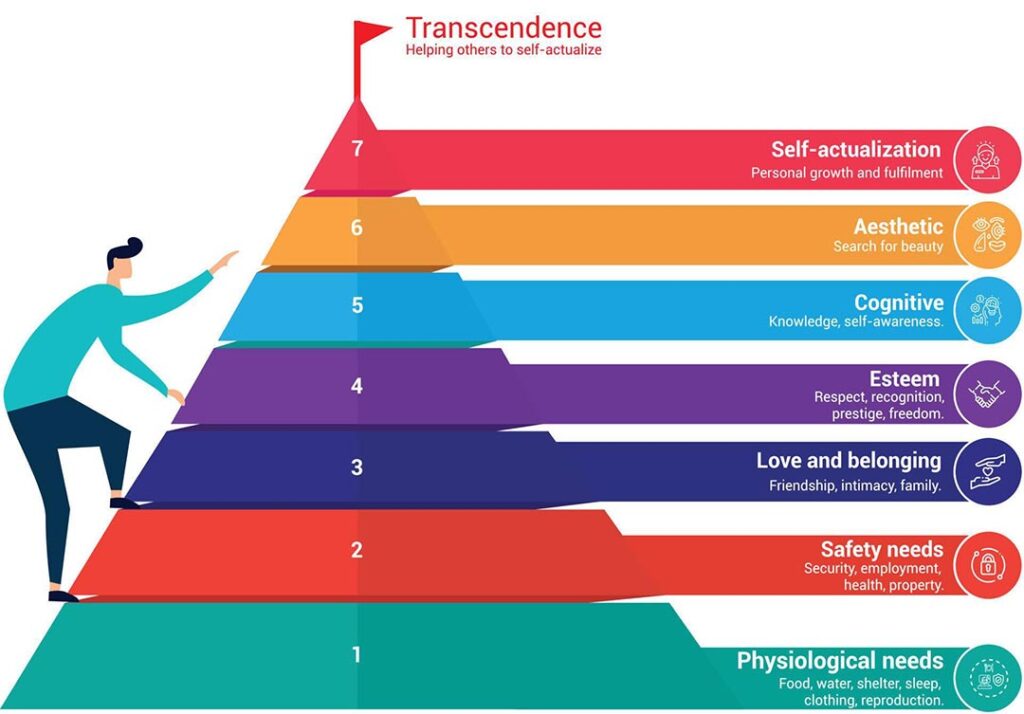
Leadership and Maslow's Hierarchy of ...
Abraham Maslow's hierarchy of needs is a fundamental psychological theory u ...

Leadership and Sustainability of Org ...
Today's business world is characterized by continuous change, technological ...

The Importance of Coaching Skills f ...
The Importance of Coaching Skills for LeadersCoaching skills are essenti ...

Fintech in Turkey: The Rise of Finan ...
Fintech in Turkey: The Rise of Financial Technology

Bancassurance
Bancassurance is a business model that is among the financial services offe ...

Banking and Frankfurt
When the banking and finance sector in Europe is analyzed, it is seen that ...

Digital Banking and Germany
Digital banking is a banking service where customers can do their banking o ...

Banking in Germany
Euro used since 2002 in The Eurozone, the currency of 19 EU members. There ...

Strategic Communication
Strategic communication plays a critical role in the success of an organiza ...

Importance of Supply Chain
The supply chain is a critical factor in which a company manages the flow o ...

Key to Success: Going Digital
Digital transformation is a transformation process that aims to increase th ...

Welfare
Poverty and inequality are one of the biggest challenges the current societ ...

ChatGPT
ChatGPT, developed by the OpenAI company known for its work and research in ...

What is Emotional Intelligence and w ...
Emotional intelligence (also known as emotional quotient or EQ) is the abil ...

The Importance of Women's Employment ...
Women's participation in the workforce is closely related to the level of d ...

Digital Banking II – Digital Banking ...
A serious step taken for the spread of “digital banking” in Turkey, providi ...

The Perception of Morality within Ma ...
If everybody in the world jumped out of a window, would you? This question ...

Digital Banking
Digital banking is a banking technology that offers customers the opportuni ...

Banking, Artificial Intelligence and ...
We have heard the concepts of metaverse, artificial intelligence and machin ...

Green Asset Ratio
Sustainable finance has an important place among the investments made for t ...

Servant Leadership
There is an effective form of management that we often hear about today: se ...

Sustainability In The Global Banking ...
Before Covid-19 wreaked havoc on the world’s economies, the global banking ...

Revolution of Digital Banking
With the European Central Bank considering to investigate for a digital cur ...

Taking Action and Making Decisions i ...
Uncertainty is the fact that an event is not within the framework of certai ...

Wind of Change
Change is an important concept that must be managed for employees at all le ...

Organizational Justice
“What is justice? Giving water to trees. What is injustice? To give water t ...

Open Banking
Digital transformation has started to show its effects in every aspect of o ...

Digital Literacy And Corporate Life
There are many innovations that managers and employees need to follow in or ...

Financial Literacy
The words money and economy are two important concepts that have a great pl ...

Sustainability and Bank
The solutions we have found to our various needs throughout history and ada ...

Adaptability, Flexibility and Leader ...
Being able to adapt to changing conditions is very, very important not only ...

Creativity and Leadership Relationsh ...
The world is getting more competitive every day. For this reason, the servi ...

Competitive Analysis and Banking Sec ...
Competition analysis requires you to examine your direct and indirect compe ...
Delegation in Management
The statements "two heads are better than one" or "teamwork makes the dream ...

Climate Change
All creatures evolve to best adapt to environmental impacts. Those who are ...

Change of Banking Service Channels i ...
Global crises such as the pandemic, force the existing structures to change ...

Innovation
It is undeniable that innovation has a very important place in today's worl ...

Artificial Intelligence
Artificial intelligence is no longer just something specific to science fic ...

Entrepreneurship
Entrepreneurship is the process of starting a new business that incorporate ...

Global Leadership
The world is changing day by day and the information we have today is out o ...

Resilience and Leadership
We encounter many events in life that cause us difficulties and stress. How ...

Entrepreneurial Spirit for Leaders
Why is important for success? The conventional perception of entrepreneursh ...


Finance Leadership in a Pandemic
Crises bring along a period in which institutions need to review their fina ...

Crisis Management
Crisis is a state of tension that puts the existence and goals of an organi ...

Strategic Leadership and Pandemic
Strategic Leader is the person who sets the roadmap to achieve the ultimate ...

Awareness, Appreciation, Success
It is very important for a person to recognize himself, discover his power ...

Woman and Career
People who are raised by unemployed mothers have a mother model in their mi ...

Conflict Management
In the broadest sense, conflict is disagreement between two or more people ...

Leading with Kindness
Kindness is an important virtue. Kindness in all areas of life makes relati ...
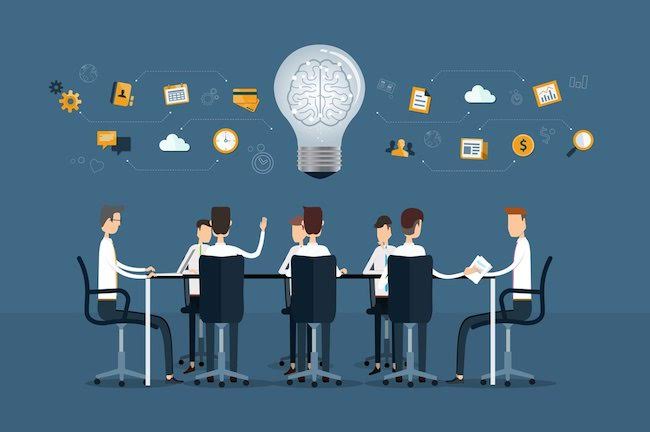
Smart Meetings
Meeting management is the process of managing all stages and components of ...

Negotiation Management
Negotiation is defined as a dialogue aimed at reaching a common and benefic ...

Virtual Leadership
The repercussions of the digitalization process in business life were sprea ...

Manager and Patience
Patience is an important concept in management. Patience is active, not pas ...

Being All Ears
Human beings differ from other creatures in their way of communicating. Com ...

Networking
The fact that managers in the corporate world act with awareness of network ...

Asking Strong Questions
For managers, asking a strong question is an important skill. Managers, who ...

Managing Yourself
The manager at work is in communication with the other parts of the busines ...

Mental Immunity
In the fight against Coronavirus (Covid-19) pandemic, knowledge and awarene ...